How to Tell a Sports Bra Is Finished Before It Lets You Down
Quick Answer: Most support comes from the band, not the straps, so check the band first: fasten it on the tightest hook and see whether it still feels firm. Then check strap recovery by stretching and releasing, look for fabric that has gone slack or thin at the wings, and note whether you have been tightening straps to compensate. Roughly 30 to 50 washes, or six to twelve months of regular use, is a common working life - and the band always goes before the fabric looks worn.
You noticed on the run, three miles in, and there was nothing you could do about it.
The bra had been telling you for a fortnight in the drawer, quietly.

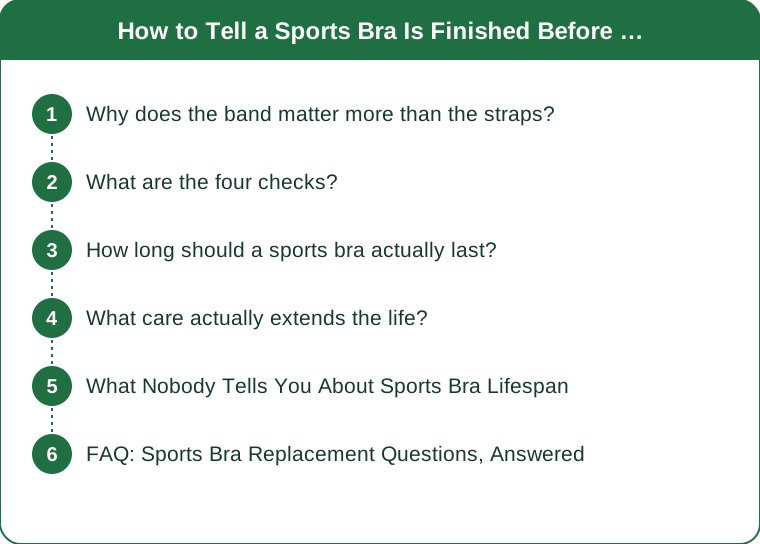
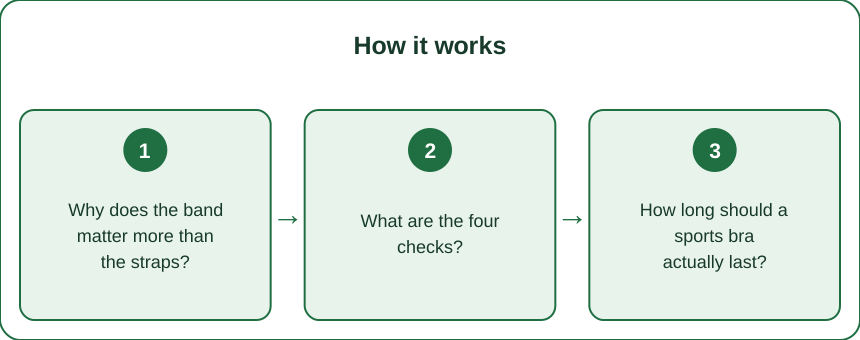
Why does the band matter more than the straps?
The band provides the majority of support in most bra designs, with straps contributing a smaller proportion.
Which means a stretched-out band is a failed bra regardless of how the straps feel.
People compensate by tightening straps, which shifts load onto the shoulders and is the most common cause of strap digging and shoulder discomfort.
If you have been tightening straps progressively, that is a band diagnosis, and it is the clearest single signal there is.
Elastic in the band degrades from heat, stretch and time, the same way it does in leggings.
And band failure is invisible. The fabric looks fine while the elastic underneath has lost its return.
What are the four checks?
Check one: fasten it on the tightest hook. If a bra that started on the loosest hook now needs the tightest and still feels loose, the band is done. If it has no hooks, put it on and pull the band away from your body - more than about an inch of give means it has stretched.
Check two: stretch and release the straps. They should snap back immediately. Slow return means degraded elastic.
Check three: look at the wings and the underband fabric against the light. Thinning, transparency or visible loss of density means the fabric has worn.
Check four: the compensating check. Have you tightened the straps, or started doubling up with another bra? Both are behavioural evidence that the support has dropped.
Do all four in about a minute, ideally when you are putting laundry away rather than when you are about to train.
And check every bra in the drawer at once, because they age together if bought together.
How long should a sports bra actually last?
A commonly cited working life is 30 to 50 washes, or roughly six to twelve months of regular use.
Frequency of use is the driver, so a bra worn four times a week fails much faster than one worn once.
High-impact bras generally have a shorter life because they are under more load and more stretch every session.
Heat is the main accelerant. Tumble drying and hot washing degrade elastic quickly and permanently.
Rotation extends the life of all of them, because elastic recovers with rest, in the same way it does in leggings.
And larger cup sizes typically see faster degradation, because the support system is under more load throughout.

What care actually extends the life?
Hand wash or use a gentle cold cycle in a mesh bag. Cold is the important part.
Never tumble dry, and never dry on a radiator, which is the seasonal killer as heating comes on in autumn.
Never wring it out. Press the water out gently and reshape.
Do not fold moulded cups inside out, which permanently distorts them.
Fasten the hooks before washing so they do not catch and pull other fabric.
And rotate at least three, which extends the useful life of each by more than the rotation alone would suggest, because elastic recovers between wears.
What Nobody Tells You About Sports Bra Lifespan
Your size changes more often than you replace bras. Body composition changes, training changes and cycle-related fluctuations all affect fit, and a bra that no longer fits is often diagnosed as a bra that no longer supports.
A bra can lose support before you consciously notice. Many people report discovering how much support they had lost only after replacing it, because the decline was gradual enough to adapt to.
Wearing it as a going-out top counts as wear. All-day casual wear stretches elastic just as training does, and the bra you wear for eight hours under a jumper is aging as fast as the one you run in.
Doubling up two old bras does not equal one good one. It is a very common workaround and it produces two poorly fitting bras and more chafing, not more support.
Impact requirement rises when your training changes. Moving from yoga to running is a change of category, not a change of intensity, and a bra that was adequate for one may be inadequate for the other regardless of its age.
Autumn increases the load on your bras for anyone who trains outdoors, because layering means more washing and more all-day wear rather than a quick change afterwards.
And the cost per wear is better than people assume. A bra worn a hundred times over eight months is inexpensive per session, and it is one of the few pieces of kit where the performance difference between adequate and good is immediately obvious. This is general information, not medical advice.
FAQ: Sports Bra Replacement Questions, Answered
How often should I replace a sports bra?
Commonly cited guidance is every 30 to 50 washes, or roughly six to twelve months for a regularly used bra. Use the four checks rather than the calendar.
Why do my straps dig in?
Usually because the band is no longer supporting and you have tightened the straps to compensate. Check the band first - the shoulders are the symptom, not the cause.
Can I put a sports bra in the washing machine?
Gentle cold cycle in a mesh bag with the hooks fastened is generally fine. Hot washes and tumble drying are what shorten the life significantly.
How many should I own?
At least three if you train regularly, so each gets rest between wears. Rotation genuinely extends the life of each one.
Does an expensive bra last longer?
Sometimes, through better materials and construction, but care matters more. An expensive bra tumble dried on hot will fail before a mid-price one that is washed cold and air dried.
Should I replace it if it still fits but feels less supportive?
Yes - that is exactly the signal to act on, and it is usually the band. Support loss precedes any visible wear.
Do I need different bras for different activities?
Higher-impact activity needs more support, so a bra suited to yoga may be inadequate for running. If you have changed what you do, reassess what you wear for it.
TL;DR:
- The band provides most of the support, so check it first, on the tightest hook.
- Tightening straps over time is behavioural evidence that the band has gone.
- Stretch and release straps - slow return means degraded elastic.
- Roughly 30 to 50 washes or six to twelve months of regular use is a common working life.
- Cold wash, mesh bag, hooks fastened, air dry - never a tumble dryer or a radiator.
- Rotate at least three, because elastic recovers with rest.
The drawer will tell you a fortnight before the run does. This is general information, not medical advice.
See It in Motion
Seen here: High Waist Embossed Yoga Leggings with Side Pockets — shop it on bubblelime.com
Keep Reading
This article is for general informational and styling purposes only. Fit, sizing, and product availability may vary.