Why a Backpack Strap Undoes What Your Sports Bra Is Doing
Quick Answer: A backpack or crossbody strap sits directly on the same shoulder path your bra straps use, adding downward load exactly where your bra is trying to avoid it. Since a well-fitted sports bra should take around 80% of its support from the band, not the straps, a heavy bag effectively converts your band-supported bra into a strap-supported one. The fix is a chest strap on the bag, a wider strap, or carrying the load on your hips.
The bra fits. You checked the band, you did the tests, the workout itself is comfortable.
But by the time you have walked twenty minutes with a bag, your shoulders and neck are aching in the exact way the new bra was meant to solve.
The bra is not failing. Something is sitting on top of it and cancelling it out.
Why does a bag strap interfere with bra support specifically?
Because they compete for the same anatomy.
A properly fitted sports bra should get the large majority of its support from the band around your ribcage. The straps exist mainly to position and stabilise — not to hold the weight. This is the whole reason band size matters more than cup size.
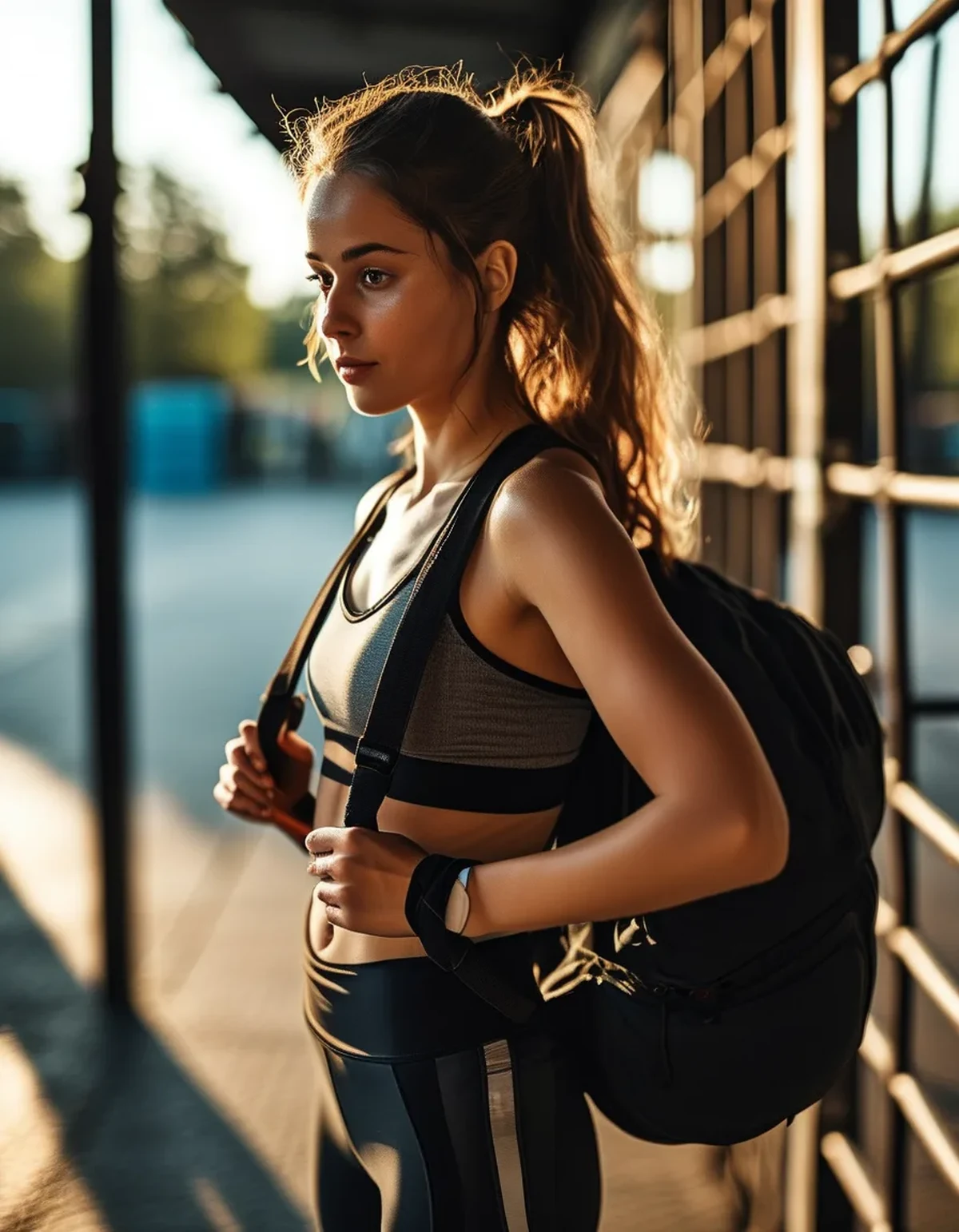
A backpack strap lands on the upper trapezius, right across the path your bra strap runs. It applies downward force on the shoulder, and that force does two things.
First, it presses the bra strap into the shoulder with far more force than the bra alone would. The strap becomes a pressure line rather than a positioning device, which is where the digging and the grooving come from.
Second, it drags the whole bra structure down and forward at the shoulder. That subtly tilts the band, so a band that sat level and firm across the ribs now angles up at the back — which is precisely the geometry that causes a band to ride up.
So the classic complaint — my band rides up during my commute but not during my workout — is usually not a band problem at all. It is a bag problem expressing itself through the band.
How much weight is actually going through your shoulders?
More than most people estimate, and the distribution matters more than the total.
A gym bag with shoes, a water bottle, a towel and a laptop lands somewhere around 5-8kg for many people. Carried on both shoulders with a well-adjusted backpack, that is manageable. Carried on one shoulder, all of it goes through a single point on one side.
That is the mechanism behind one of the most common questions in bra fitting: why does one strap dig in and not the other?
The usual answer given is asymmetry of the body, which is real but small. The much larger and more fixable cause is that you carry your bag on the same shoulder every day, and have done for years.
The test is easy. Carry the bag on the other side for a week. If the digging moves sides, it was the bag. If it stays, look at the bra.
The other thing weight does is change over the season. A summer commute bag holds a bottle and a towel. By the time it holds a jacket, a jumper and an umbrella, the same bag is meaningfully heavier — which is why shoulder discomfort quietly reappears in the first cool weeks even though nothing about the bra changed.
What nobody tells you about strap width
A wider bag strap is worth more than a padded one.
Padding compresses. After a few months, a thickly padded narrow strap compresses down to a narrow strap with a soft edge, and the pressure per square centimetre goes right back up.
Width does not compress. A 5cm strap spreads the same load over roughly twice the area of a 2.5cm strap, permanently.
The same logic is why sports bra straps got wider across the whole category — it was never about looks. A wide strap under a wide bag strap is a genuinely comfortable combination. A thin bra strap under a thin bag strap is the worst possible pairing, and it is exactly what happens when you throw a tote over a racerback.
Practical hierarchy for a gym commute, best first:
- Backpack with a chest strap, worn on both shoulders, chest strap fastened.
- Backpack with wide straps, no chest strap.
- Crossbody bag worn diagonally — spreads load across the torso rather than one shoulder.
- Single-shoulder tote or duffel — worst option, and the one most people use.
The chest strap is the single biggest upgrade on this list, and most people who own one have never clipped it.

Which bra styles cope best under a bag?
The ones that keep the strap off the pressure point.
Racerback — straps sit closer to the neck, which is usually inside where a backpack strap lands. This often means the two do not stack directly, and racerback is frequently the more comfortable choice under a pack. It does, however, put more load toward the neck itself.
Crossback — the crossing point sits mid-back, below where bag straps run. Generally good under a backpack.
Straight straps — sit furthest out on the shoulder, which is exactly where a bag strap lands. Worst combination for a commute, even though they are often the most comfortable in the gym.
Wide-strap styles in any configuration beat thin-strap versions of the same design.
If you commute to the gym daily, it is worth having one bra you wear for the journey and change intentions on — or simply choosing racerback for commuting days and straight straps for driving days. This is far less fussy than it sounds once you notice which days your shoulders complain.
Persistent neck and shoulder pain, tingling in the arms or numbness in the hands is worth getting properly assessed rather than adjusting straps around. This is general information, not medical advice.
What should you change first?
In order of effort versus payoff.
1. Fasten the chest strap on your backpack. Free, takes two seconds, and it pulls the shoulder straps inward and stops them sliding outward onto the pressure line. Most impactful single change available.
2. Swap shoulders, or stop carrying single-shoulder entirely. If you use a tote or duffel, this is the change that matters most.
3. Tighten the backpack so it sits high. A pack hanging low pulls backward and down on the shoulders. High and snug transfers load closer to your centre of mass.
4. Check your bra band, not your straps. If the band has loosened over months of washing, the straps have been taking more load than they should even before the bag arrives. A band that rides up when you raise your arms is too loose, and no bag adjustment will fix that.
5. Reduce what is in the bag. Obvious, ignored. Most gym bags contain a permanent layer of things that have not been used in weeks.
6. Consider a hip-belt bag for longer commutes. If you walk more than half an hour each way, moving load to the hips is a different order of improvement.
FAQ: Bags and Sports Bras, Answered
Why does my bra feel fine at the gym and bad on the walk home?
Because the bag is only on for the walk. The workout itself is the part without the extra load — which is why the bra can be genuinely well-fitted and the commute still uncomfortable.
Should I loosen my bra straps when carrying a bag?
Slightly, yes — if the straps are currently taking meaningful load. But if loosening them makes the bra feel unsupportive, the band is too loose and that is the real fix.
Does this apply to a crossbody bag too?
Less so, because a crossbody spreads the load diagonally across the torso rather than pressing down on one shoulder point. It can, however, compress across the chest and shift the band. A crossbody worn loose and low is generally better than one worn high and tight.
TL;DR:
- A bag strap sits on the same shoulder path as your bra strap, converting band support into strap pressure.
- Fasten the chest strap on your backpack — the highest-value free fix available.
- Width beats padding; a wide bra strap under a wide bag strap is the comfortable combination.
- Racerback and crossback cope better under a pack than straight straps do.
- One strap digging in more than the other is usually the bag, not your body — swap shoulders for a week and see.
If you have been through three sports bras trying to solve shoulder discomfort, try the bag before the fourth bra. Clip the chest strap, tighten it high, take out whatever has been living in the bottom of it since June, and give it a week. It is a genuinely common cause and a very cheap one to rule out.
See It in Motion
Seen here: UPF 50+ Short Sleeve Rashguard Swim Shirt — shop it on bubblelime.com
Keep Reading
This article is for general informational and styling purposes only. Fit, sizing, and product availability may vary.