Is Your Sports Bra Causing Your Neck and Shoulder Pain?
Quick Answer: When a sports bra band is too loose, the straps take over the support job - and straps pull downward on the upper trapezius, the muscle that already carries most desk and phone tension. The result is aching between the neck and shoulder, often worse on one side. The band should be doing the large majority of the work. Tighten the band, loosen the straps, and see whether the ache follows.
Straps are for positioning.
The band is for support - and when it stops doing its job, your neck takes the shift.

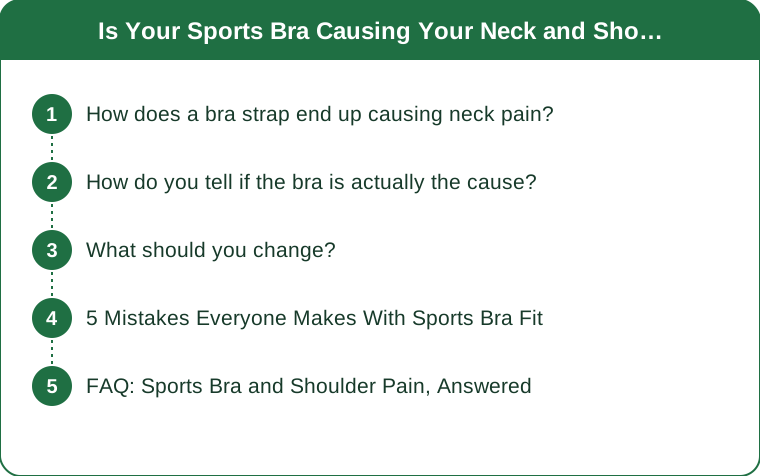
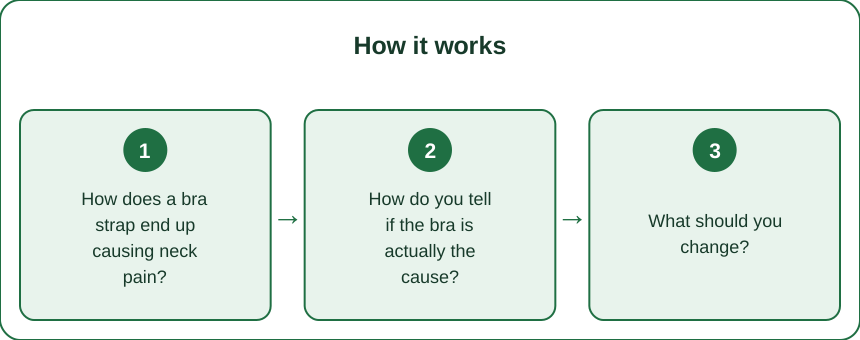
How does a bra strap end up causing neck pain?
By loading a muscle that is already the most overworked one in modern life.
Support in a well-fitted bra comes overwhelmingly from the band, not the straps. The band anchors around the ribcage and carries the majority of the load. Straps exist to position and stabilise, not to hold weight.
A loose band shifts the job upward. If the band rides up or slides around, the only remaining anchor is the shoulders - so the straps get tightened, and the weight transfers onto the upper trapezius.
The upper trapezius is already carrying a lot. It elevates the shoulder and supports the neck, and it is the muscle that tightens with desk work, phone use, bag carrying, and stress. Adding sustained downward pressure to an already loaded muscle is a reliable recipe for aching.
Narrow straps concentrate the force. The same load through a thin strap creates far higher pressure per square centimetre than through a wide one, which is why thin-strapped bras produce visible grooves and deeper aching.
High-impact activity multiplies the effect. Running produces repeated downward force with every stride, and if that force goes through the straps rather than the band, the trapezius absorbs thousands of small impacts per session.
And it is often one-sided. Most people have a slightly higher shoulder or carry a bag on one side, so one strap takes more and one side aches more.
How do you tell if the bra is actually the cause?
Four checks, all of which take under a minute.
Look for strap grooves after you take it off. Visible indentations that persist for more than a few minutes mean the straps are carrying real load. Faint marks are normal; grooves are not.
Do the band test. With the bra on, slide two fingers under the band at the side. It should be snug enough that you can just fit them and firm enough that you cannot pull it more than a couple of centimetres from your body. If it lifts easily, it is too loose.
Raise your arms overhead. If the band rides up your ribcage and stays there, it is not gripping and the straps are doing the work. A correctly fitted band barely moves.
Then do the strap test. Slip the straps off your shoulders while wearing it. A well-fitted bra still provides noticeable support with the straps down - if everything drops, the band was contributing nothing.
And check the pattern in time. Ache that is worse on training days and after long wear, and better on rest days, points strongly at the garment. Ache that is constant regardless is more likely your desk, your sleep position, or something else.
This is general information, not medical advice. Persistent neck pain, especially with numbness, tingling, arm weakness, or headaches, should be assessed by a physiotherapist or doctor.

What should you change?
The band first, then the strap width, then the style - in that order.
Go down a band size and up a cup size. This is the standard adjustment and it is what most people need. A 36C and a 34D hold a similar cup volume, but the smaller band actually grips - and gripping is the whole point.
Tighten the band and loosen the straps. Counterintuitive but correct. Straps should be snug enough to stay put and loose enough that you can lift them a couple of centimetres off your shoulder.
Choose wider straps for high-impact activity. Pressure spread over a wider area is dramatically more comfortable at the same support level, and it is the single easiest upgrade.
Try a racerback or crossback for load distribution. These pull the strap anchor points toward the centre of the back, which changes the angle of pull and takes some load off the top of the shoulder. Many people with strap-related aching find this alone resolves it.
Replace it if the band has lost its elasticity. A band that no longer grips cannot be fixed by adjustment. Most sports bras lose meaningful support well before they look worn out - typically after somewhere around 30 to 40 washes with regular use.
And check the closure. If you are already on the tightest hook of an older bra, it is done. New bras should fit on the loosest hook so there is room to tighten as the elastic relaxes.
5 Mistakes Everyone Makes With Sports Bra Fit
Tightening the straps when support feels inadequate. The instinctive fix and the one that causes the problem. When support is lacking, the band is wrong - tightening straps just moves the load to your neck.
Buying by the same size as a regular bra. Sports bra sizing runs differently between brands and styles, and compression styles fit differently from encapsulation ones. Size to the specific garment, not to a number you remember.
Wearing it too long after it stopped supporting. Elastic degrades gradually, so the decline is invisible. If you have been tightening the straps over months, the band gave up a while ago.
Choosing narrow straps for running. Thin straps look neater and concentrate force badly. For anything high-impact, strap width is a comfort feature worth prioritising.
Ignoring one-sided symptoms. Aching on one side only usually means an asymmetry - a higher shoulder, a bag habit, or simply a strap adjusted differently. Adjust the two straps independently, which many people never think to do.
And the bonus one: washing on hot and machine drying. Heat destroys elastane, and destroyed elastane is a band that no longer grips. Cold wash, air dry - it genuinely doubles the useful life of a bra.
FAQ: Sports Bra and Shoulder Pain, Answered
How tight should the band actually be?
Snug enough that two fingers just fit underneath, and firm enough that it does not ride up when you raise your arms. It should feel noticeably firmer than a regular bra band - that firmness is what keeps the load off your shoulders.
Will a racerback definitely help?
Often, because it changes the angle of pull and moves the anchor toward the mid-back, but it is not universal. Some people find racerbacks pull the shoulders forward and prefer a wide-strap crossback instead. Worth trying both before concluding.
How often should I replace a sports bra?
When the band no longer grips on the loosest hook, when you are relying on tightened straps, or when support noticeably drops during activity. For regular use that is often somewhere between six and twelve months - much sooner than the fabric appears to need it.
TL;DR:
- The band should carry most of the support. When it is loose, the straps take over and pull on your upper trapezius.
- Test it: two fingers under the band, arms overhead, and try it with the straps slipped down.
- Go down a band size and up a cup size, then tighten the band and loosen the straps.
- Wider straps and a racerback or crossback spread and redirect the load.
- Cold wash and air dry - heat is what kills the elastic that makes the band grip.
Do the arms-overhead test before your next session. If the band rides up and stays there, you found your neck ache.
See It in Motion
Seen here: UPF 50+ Racerback Yoga Tank Top — shop it on bubblelime.com
Keep Reading
This article is for general informational and styling purposes only. Fit, sizing, and product availability may vary.