The Band, Not the Cups, Determines Most of Your Sports Bra's Support — Here's Why
Quick Answer: Roughly 80% of a sports bra’s support comes from the band staying snug and level around your ribcage, not the cups. If the band rides up in the back or feels loose, no amount of “right” cup size will fix bounce control.
Most fitting mistakes happen because shoppers focus entirely on cup fit and grab whatever band size feels comfortable standing still — then wonder why there’s still bounce during a run.

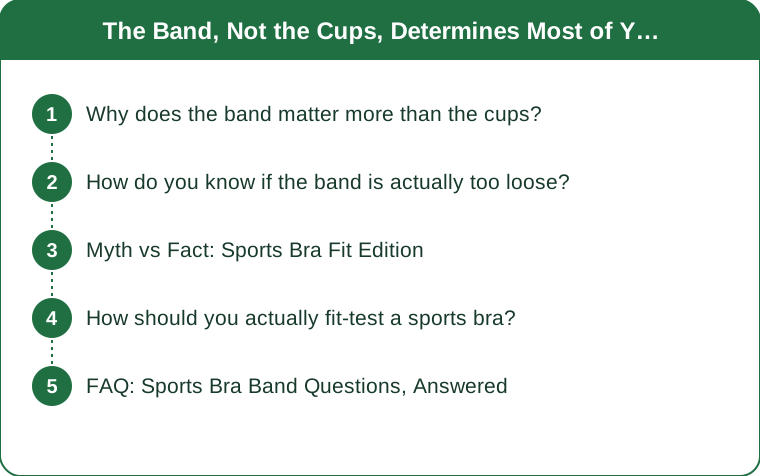
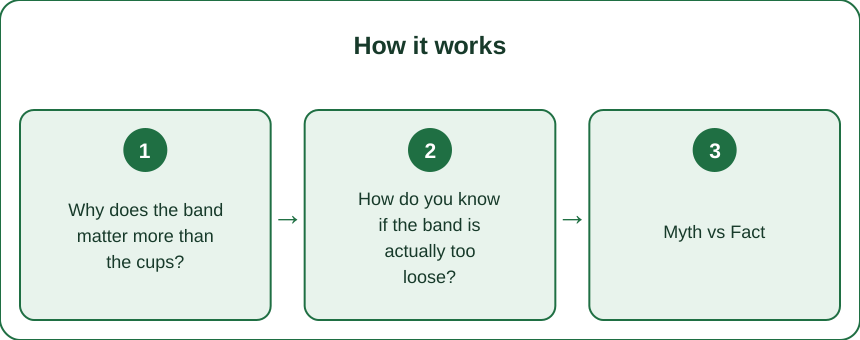
Why does the band matter more than the cups?
The band is what anchors the bra against your ribcage and does the majority of the work resisting vertical movement — cups shape and contain, but they can’t compensate for a band that’s shifting or riding up.
A properly fitted band should feel snug on the loosest hook, staying level and parallel to the floor all the way around, even during movement.
How do you know if the band is actually too loose?
The classic test: after putting the bra on, run in place or jump a few times. If the band rides up in the back or shifts noticeably, it’s too loose regardless of how the cups look in the mirror standing still.
A snug-but-not-restrictive band shouldn’t move independently from your ribcage during that same test.

Myth vs Fact: Sports Bra Fit Edition
Myth: A bigger cup size means more support. Fact: Support comes primarily from band tightness and strap design, not cup volume. A correctly banded bra with the “wrong” cup size often outperforms a loose band with perfect cups.
Myth: You should size up for comfort during high-impact workouts. Fact: Sizing up loosens the band precisely where support matters most — high-impact activities need a snugger band, not a looser one.
Myth: Straps are the main support mechanism. Fact: Straps mainly stabilize and lift; the band handles the bulk of the anti-bounce work. Tightening straps to compensate for a loose band just adds shoulder strain.
How should you actually fit-test a sports bra?
Put it on the loosest hook first (you’ll tighten as the band stretches with wash and wear over time), then do the jump/run-in-place test before deciding.
Check that you can slide 1-2 fingers under the band comfortably but not more — more than that means it’s too loose to do its job during real movement.
FAQ: Sports Bra Band Questions, Answered
Should the band feel tight when I first put it on?
Snug, not painfully tight — you should be able to breathe fully and slide 1-2 fingers under it, no more.
Does band size change with weight fluctuations?
Yes, and it’s common enough that many bras come with multiple hooks specifically to adjust for this over time — check the hook position periodically.
Why does my sports bra ride up even though it fit fine in the store?
Bands stretch out gradually with wash and wear — moving to a tighter hook setting (if available) or replacing the bra after 6-12 months of heavy use usually solves it.
TL;DR:
- Band snugness does most of the anti-bounce work, not cup size
- Test fit by jumping or running in place, not just standing at the mirror
- Sizing up for comfort loosens exactly the part that needs to stay snug
- Start on the loosest hook and check for 1-2 finger slack, no more
Next bra purchase, fit-test the band with movement before worrying about the cups.
See It in Motion
Seen here: UPF 50+ Racerback Yoga Tank Top — shop it on bubblelime.com
Keep Reading
This article is for general informational and styling purposes only. Fit, sizing, and product availability may vary.