Why a Sports Bra Fits Differently After the First Wash
Quick Answer: New sports bras carry finishing treatments and manufacturing tension that the first wash removes, so a small change in fit after one wash is normal and expected. What is not normal is a large change, and that usually comes from heat — hot water, a tumble dryer, or fabric softener degrading the elastane that provides the support. The first wash reveals the true fit; every subsequent wash either preserves it or destroys it.
It was perfect in the shop. One wash later the band feels loose and the cups sit differently.
Some of that was always going to happen. Most of the rest was avoidable.
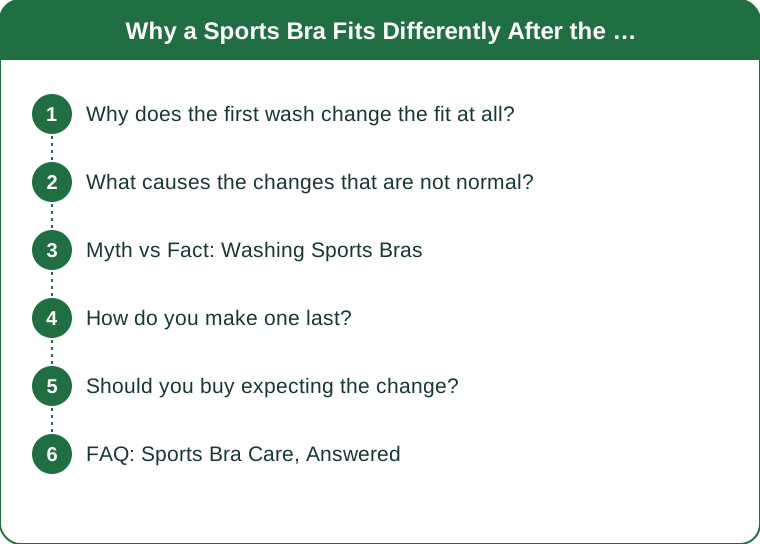
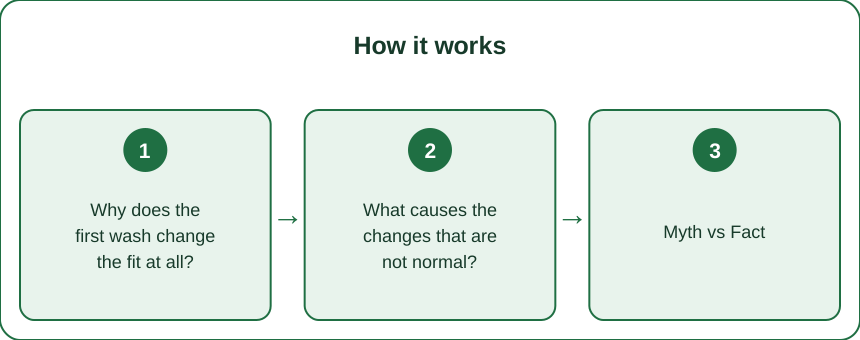
Why does the first wash change the fit at all?
Because a new garment is not in its settled state.
Several things come off in the first wash. Finishing treatments applied during manufacturing — softeners, sizing agents, anti-crease finishes — give new fabric a particular hand feel and a slight stiffness. They wash out, and the fabric relaxes.
Manufacturing tension is the other factor. Knitted fabrics are held under tension during construction and finishing, and the first exposure to water and agitation allows the yarn to relax into its natural configuration. This is the same mechanism as shrinkage in cotton, though in synthetic activewear it usually shows as relaxation rather than shrinkage.
The net result for most sports bras is a slight loosening of the band and a softening of the fabric. Perhaps 2-3% dimensional change, which on a band is enough to feel.
This is why the fitting advice for bras generally is to buy on the tightest hook — the band relaxes with wear and washing, and the tighter setting gives you somewhere to go. A sports bra without hooks does not offer that adjustment, which is part of why the first-wash change is more noticeable in a pull-on style.
What causes the changes that are not normal?
Heat, almost always, and it acts on the elastane specifically.
A sports bra typically contains somewhere between 10% and 30% elastane, and that fibre does essentially all of the support work. Elastane is also the most heat-sensitive component in the garment by a wide margin.
Hot water begins degrading it. A tumble dryer does considerably more damage, because dryer temperatures are higher and sustained. Elastane fibres that have been heat-damaged do not recover their original length after stretching, which is exactly what a loose, floppy band is.
Fabric softener works by depositing a coating on fibres. On cotton this feels pleasant. On technical fabrics it clogs the spaces between fibres, destroys moisture-wicking performance, traps bacteria and odour, and reduces the fabric’s ability to stretch and recover. It is the single most damaging thing routinely applied to activewear.
Over-detergenting matters too. Excess detergent does not rinse fully from dense technical fabric, builds up, and stiffens it.
A useful diagnostic: a bra that feels looser only in the band has usually had heat damage. A bra that feels stiff, less breathable, and holds smell has usually had softener. A bra that has gone shiny or thin at a stress point has usually been through a dryer many times.
Myth vs Fact: Washing Sports Bras
Myth: sports bras should be washed after every wear. Fact: after every sweaty wear, yes — bacteria in trapped sweat is what causes both odour and fabric breakdown. After a low-intensity wear, airing is adequate. The frequency of washing matters far less than the temperature.
Myth: hot water cleans activewear better. Fact: it removes oils marginally better and damages elastane substantially. A cold or 30°C wash with a proper detergent removes sweat and bacteria perfectly well, since the compounds involved are not heat-dependent to dissolve.
Myth: hanging to dry stretches them out. Fact: hanging a wet, heavy garment by its straps does put load on them. Drying flat avoids that entirely and takes the same amount of time. This is one of the rare cases where the folk advice is half right.
Myth: a mesh bag is unnecessary fuss. Fact: it genuinely helps, mostly by preventing hooks, zips and abrasive fabrics elsewhere in the load from catching the bra. Most visible damage to sports bras is mechanical rather than chemical, and comes from other items in the drum.
Myth: sports-specific detergents are marketing. Fact: partly, but the mechanism is real. They tend to be low-residue and enzyme-based, which addresses the odour-causing compounds that build up in synthetic fabric and that standard detergents leave behind. A regular detergent used sparingly gets most of the way there; using too much of one gets you the opposite.
How do you make one last?
The routine is short and the difference in lifespan is substantial.
Rinse in cold water after a heavy session if it will not be washed immediately. Sweat left to dry in the fabric does most of the long-term damage.
Wash cold or at 30°C, on a gentle cycle, in a mesh bag.
Use about half the detergent you think you need, and no fabric softener at any point.
Never tumble dry. This is the single most important rule and the one most frequently broken.
Dry flat, out of direct sun. UV degrades elastane too, though slowly.
Rotate between at least three. Elastane recovers its shape over roughly 24 hours after being stretched. Wearing the same bra daily never allows that recovery, and it deforms permanently much faster. Three in rotation last considerably more than three times as long as one worn continuously.
Expect a genuine lifespan of 6-12 months for a regularly used sports bra, or roughly 40-50 wears for high-impact use. This is a consumable item with a support function, and a bra that has lost its stretch is not providing the support it was bought for regardless of how intact it looks.
Should you buy expecting the change?
Yes, and it changes how you fit one in the shop.
Buy at the point where the band feels slightly firmer than comfortable but not restrictive. It will relax. A band that feels perfect on day one will feel loose within a month.
Do the movement test in the fitting room, not just the standing test. Jump, run on the spot, raise your arms overhead. Most fit problems only appear in motion, and a bra assessed standing still is being assessed in the one situation it was not designed for.
Check the band does not ride up when you raise your arms. If it does, the band is too loose already, and it will get looser.
Remember that the band does most of the work. The common instinct when a bra feels unsupportive is to tighten the straps, which transfers load to the shoulders and causes the digging and neck pain people associate with sports bras generally. A firm band and relatively loose straps is the correct configuration.
And keep the receipt through the first wash. Any reputable retailer will accept a return on a garment that has changed substantially after one correct wash, and a change that large indicates a manufacturing problem rather than normal relaxation. Most people assume it is their fault and keep something that never fitted properly again.
FAQ: Sports Bra Care, Answered
How do I get the smell out of one that already holds odour?
A soak in a solution of white vinegar and cold water for 30 minutes before a normal cold wash removes a great deal of built-up residue and the bacteria living in it. Repeat once or twice if needed. If softener has been used regularly, several washes may be required to strip the coating, and some fabrics never fully recover.
Does hand washing actually help?
It is gentler mechanically, which extends life. But a cold gentle machine cycle in a mesh bag is close enough that most people are better off doing that consistently than hand washing occasionally and machine washing hot when they run out of time.
How do I know when to replace one?
The practical test: put it on and jump. If there is noticeably more movement than there was when it was new, the elastane has gone regardless of how the fabric looks. Visible signs — a band that no longer springs back when pulled, straps that have lengthened, fabric that has gone thin at stress points — confirm what the jump test tells you.
TL;DR:
- A small fit change after the first wash is normal — finishing treatments wash out and manufacturing tension relaxes.
- Large changes come from heat: hot water and especially tumble drying degrade the elastane that does all the support work.
- Fabric softener coats technical fabric, kills wicking, traps odour, and reduces recovery — never use it on activewear.
- Wash cold in a mesh bag with half the detergent, dry flat, and rotate at least three so elastane can recover between wears.
- Buy slightly firmer than comfortable, test in motion, and expect 6-12 months of real life from a high-impact bra.
The part that surprises people most is the rotation. Elastane needs about a day to recover from being stretched, and a single bra worn every session is being asked to do something the fibre cannot do — which is why three bras in rotation reliably outlast three bras worn one after another until each dies.
See It in Motion
Seen here: Round Neck Long Sleeve Athletic T-Shirt — shop it on bubblelime.com
Keep Reading
This article is for general informational and styling purposes only. Fit, sizing, and product availability may vary.