Why Your Sports Bra Band Size Matters More Than the Cup Number
Quick Answer: The band provides roughly 80% of a sports bra’s support, not the straps or cup — a loose band undermines even the ‘right’ cup size, which is why band fit should be the first thing you check, not the last.
Most people walk into sports bra shopping thinking entirely in cup letters, the same way they’d shop for an everyday bra. High-impact support doesn’t work that way, and understanding why changes how you should actually be sizing.

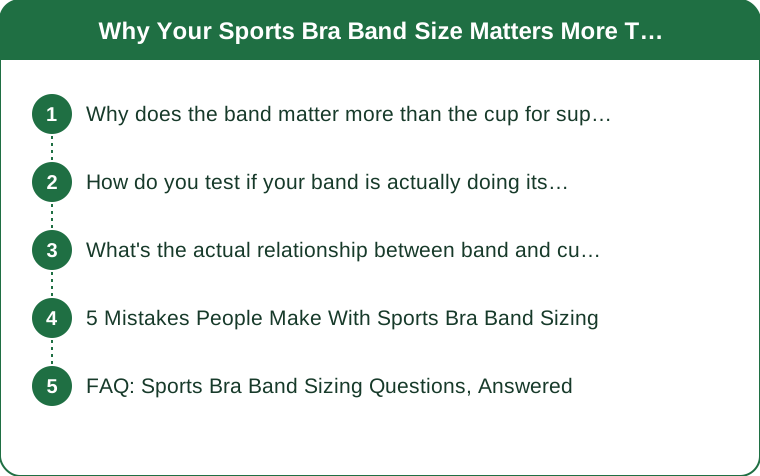
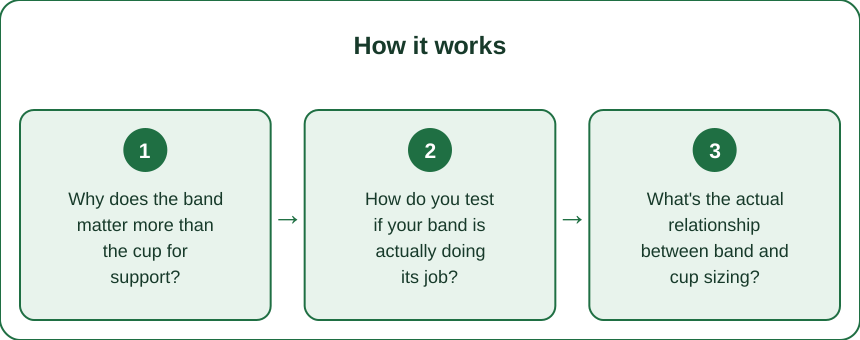
Why does the band matter more than the cup for support?
The band forms a stable, snug foundation around your ribcage that anchors everything else — straps and cups only work well when that foundation isn’t shifting. A band that’s too loose lets the whole bra bounce and ride up, no matter how well the cup fits, which is why support complaints often trace back to the band even when someone assumes it’s a cup problem.
How do you test if your band is actually doing its job?
Do a few jumping jacks in the bra before deciding it’s fine. The band should stay level and snug on the loosest hook without you having to adjust it mid-motion. If it rides up your back or you feel the whole bra rotate, the band is too loose — size down, keeping the same cup letter.

What’s the actual relationship between band and cup sizing?
They move independently. Sizing down a band while keeping the same cup letter actually makes the cup slightly smaller in absolute terms — this is why a 34C and a 32D can have a similar cup volume but very different band support. Most sizing mistakes come from changing the wrong number, or changing both at once and losing track of which fix worked.
5 Mistakes People Make With Sports Bra Band Sizing
1. Buying based on everyday bra size. High-impact fabric and construction fit differently — don’t assume your regular size transfers directly.
2. Choosing the tightest hook as your only checkpoint. The band should be snug on the loosest hook when new, leaving room to tighten as it stretches with wear.
3. Ignoring back bounce. If you can see or feel the band moving during a jump test, it’s too loose, regardless of how the cups feel.
4. Assuming discomfort means too tight. Genuine tightness (red marks after 10 minutes, trouble breathing) means size up; a band that just feels snug and secure is often correctly fitted, not too tight.
5. Never re-checking band size over time. Bands stretch with wash cycles and wear — a band that fit perfectly a year ago may now be too loose.
FAQ: Sports Bra Band Sizing Questions, Answered
How do I know if my sports bra band is too loose?
If it rides up your back during movement or you can pull it more than 2 inches away from your body while standing still, it’s too loose — size down.
Should the band feel tight when a sports bra is new?
Snug, not painful, and fastened on the loosest hook when new — this gives room to tighten as the fabric naturally stretches with wear and washing.
Does band size matter as much for low-impact activities like yoga?
Less critically, but still matters — a loose band still causes shifting and discomfort even at low intensity, just with lower stakes than during running or jumping.
TL;DR:
- The band supplies most of a sports bra’s actual support, not the cup
- Test with a jump test: band should stay level and snug without adjusting
- Band and cup size move independently — don’t change both at once
- Re-check band fit periodically since fabric stretches over time
Get the band right first, and most ‘this sports bra doesn’t support me’ complaints resolve on their own.
See It in Motion
Seen here: Racerback Tank Top - White — shop similar styles on bubblelime.com
Keep Reading
This article is for general informational and styling purposes only. Fit, sizing, and product availability may vary.