Why Two Identical Sports Bras From the Same Brand Fit Differently
Quick Answer: Five things vary between two supposedly identical bras: the fabric roll they were cut from, the factory that sewed them, elastic tension settings on the day, silent design revisions between production runs, and the dye lot - dark dyes are processed at higher temperatures and can change how the elastane recovers. Manufacturing tolerance in activewear is typically around half an inch, which on a compressive band is very noticeable. None of it means you were sent the wrong item.
Here is which variable does what, and how to tell whether it is the bra or you.

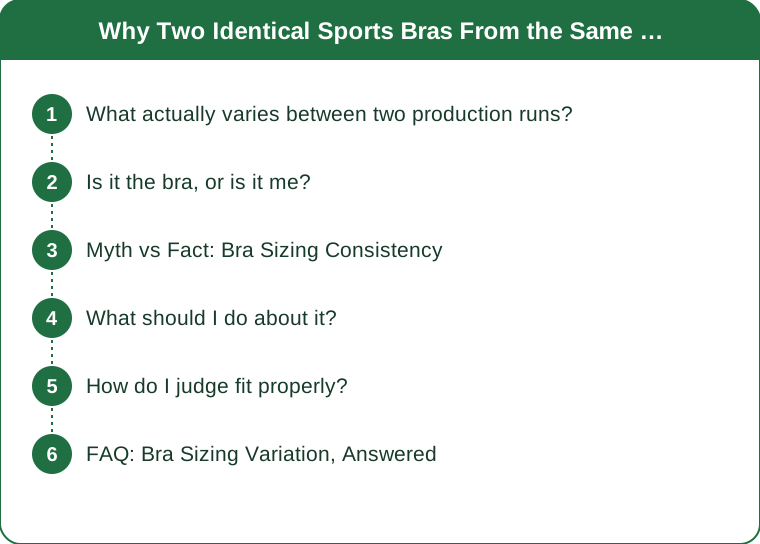
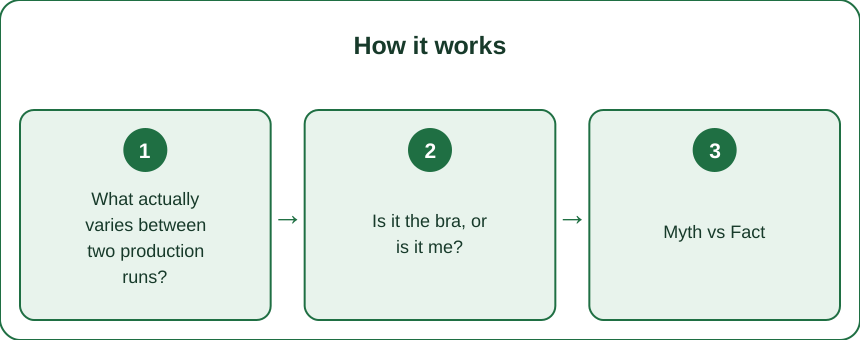
What actually varies between two production runs?
Fabric comes in rolls, and rolls vary. Two rolls of the same specification can differ in weight, stretch, and recovery within the supplier’s tolerance. A bra cut from a slightly stretchier roll fits looser at identical dimensions.
Brands use multiple factories. A style selling well is often produced in more than one place, and each has its own machines, operators, and interpretation of the pattern. Check the country of origin on the two labels - it is frequently different.
Elastic is applied under tension, and that tension is a machine setting. A small difference in how much the band elastic is stretched during sewing produces a meaningfully different finished band circumference. This is the single largest source of band variation.
Designs get revised quietly. Brands adjust patterns, change a strap width, or switch a fabric supplier without renaming the style or telling anyone. A bra bought a year apart may be a genuinely different garment.
And dye lots matter more than people expect. Dark colours are dyed at higher temperatures and for longer, which can affect elastane behaviour - which is why the black version of a style sometimes fits tighter or looser than the same style in a pale colour.
Is it the bra, or is it me?
Test it directly: try them on within ten minutes of each other. Same time of day, same conditions. If one is clearly tighter, the difference is in the garment.
Measure the bands flat. Lay both on a table, unstretched, and measure the band edge to edge. A difference of half an inch or more is a manufacturing difference, not perception.
Check hook position. If one fits on the loosest hook and the other on the tightest, that is roughly two inches of difference - well outside normal tolerance and worth returning.
Your body genuinely varies too. Ribcage circumference and breast volume change across the menstrual cycle, with sodium intake, with weight, and by time of day. A bra tried on at 8am and 6pm is being tried on different bodies.
Washing history is a real confounder. A bra washed thirty times has lost some elastic recovery. Comparing a new one to an old one is not a fair comparison even if they were identical when made.
And check the label carefully. Different fabric composition, different country of origin, or a slightly different style number means you are comparing two different products that happen to look the same.
Myth vs Fact: Bra Sizing Consistency
Myth: the same size from the same brand should always fit the same. Fact: manufacturing tolerance in activewear is typically around half an inch, and on a compressive band that is very noticeable. Consistency within a brand is better than across brands, not perfect.
Myth: a tighter band means it was made wrong. Fact: it may simply be at the tight end of tolerance. A band should be firm - it provides the majority of support - and many people are used to bands that are actually too loose.
Myth: cup size is the main fit variable. Fact: the band provides most of the support and is where most variation shows up. A band problem is usually misread as a cup problem.
Myth: dark colours always run smaller. Fact: dye processing can affect elastane behaviour, but the direction is not consistent. It is a source of variation, not a predictable rule.
Myth: if it stretches out, you can size down next time. Fact: all bras lose some recovery with wear. Sizing down to compensate for a worn-out bra produces one that is too tight when new - buy the size that fits new and replace when it stops supporting.
Myth: you should buy several when you find one that fits. Fact: reasonable in principle, but buying five at once means five bras ageing simultaneously, and they may be from the same run rather than different ones. Two or three is the sensible version.

What should I do about it?
Try both on and keep the one that fits. Obvious, and worth stating - a bra that fits badly does not get better with wear, and sports bras that do not support are actively uncomfortable.
Return anything outside tolerance. A half-inch difference is normal; an inch or more is a defect and most retailers will take it back if you explain the comparison.
Buy the tighter one if you are between. Bands stretch with wear, so the slightly firmer one has a longer useful life and the looser one will be unsupportive within a couple of months.
Note the country of origin and style number on ones that fit. If a repeat purchase is different, you now know what to ask the brand for - and some will tell you which run a current stock item is from.
Rotate rather than favouring one. Elastic needs 24 hours to recover, so wearing the good one every session ages it faster and the difference between them grows.
And check the fit again at each season change. Sports bras feel tighter when training moves indoors and you are warmer, and body composition often shifts slightly through autumn - both change how the same bra reads.
How do I judge fit properly?
The band does 80% of the work. It should sit level all the way round, firm enough that you can slide two fingers under it but not pull it more than an inch or two away from your back.
Ride-up means the band is too loose. If it climbs during a workout, the band is not gripping - the answer is a smaller band, not tighter straps.
Straps should carry very little. Strap marks or shoulder pressure indicate the band is not doing its job. Adjust the band size first, always.
Do the jump test in the changing room. Twenty seconds of jumping and a few arm swings tells you more than five minutes of standing still. Movement is what you are buying it for.
Check it warm. Your ribcage expands as you warm up and breathe harder, so a bra that is borderline at rest can be genuinely uncomfortable at minute twenty.
And replace on function, not appearance. A sports bra that still looks fine but no longer holds you is finished - typically after roughly 30 to 40 wears with washing, or sooner with heavy use. Ongoing pain, numbness, or persistent chafing despite a correct fit is worth raising with a professional fitter or a doctor. This is general information, not medical advice.
FAQ: Bra Sizing Variation, Answered
Why does my new sports bra fit differently from the identical old one?
Fabric roll variation, a different factory, elastic tension settings, a quiet design revision, or a different dye lot. Manufacturing tolerance is typically around half an inch, which is very noticeable on a band.
How much difference is normal?
About half an inch in band measurement. A full inch or more, or a two-hook difference in where it fastens, is outside normal tolerance and worth returning.
Should I buy several when I find one that fits?
Two or three is sensible. Buying five means they all age at the same rate and may all come from the same production run, so you get no protection against variation.
Does colour affect fit?
It can - dark dyes are processed at higher temperatures, which affects elastane behaviour. But the direction is not predictable, so treat it as a source of variation rather than a rule.
Is the band or the cup more likely to be the problem?
The band, by a wide margin. It provides most of the support and is where most manufacturing variation shows up. Band problems are frequently misdiagnosed as cup problems.
How often should I replace a sports bra?
Roughly every 30 to 40 wears with washing, or when it stops supporting - whichever comes first. Appearance is a poor guide; function is the test.
Should I size down as it stretches out?
No. Buy the size that fits when new. Sizing down to compensate for a worn bra gives you one that is too tight from the start.
TL;DR:
- Five variables differ between runs: fabric roll, factory, elastic tension setting, quiet design revisions, and dye lot.
- Tolerance is about half an inch, which is very noticeable on a compressive band. An inch or a two-hook difference is a defect.
- Test properly: try both within ten minutes, and measure the bands flat and unstretched.
- Your body varies too - across the cycle, by time of day, and with sodium. Compare like with like.
- Buy the firmer one if between. Bands stretch with wear, so the looser one has a shorter useful life.
- The band does 80% of the work. Ride-up means the band is too loose, not the straps too slack.
- Replace on function, not appearance - roughly 30 to 40 wears with washing.
Note the country of origin and style number on ones that fit. It is the only way to ask for the same run again.
See It in Motion
Keep Reading
This article is for general informational and styling purposes only. Fit, sizing, and product availability may vary.