Why Your Sports Bra Feels Tighter After the Warm Up Than Before It
Quick Answer: Your ribcage expands measurably during exercise as breathing deepens, and a band fitted while you were breathing quietly at rest becomes restrictive within minutes. Add fabric that stiffens slightly when damp and a band you fitted on the tightest hooks, and it feels like a vice. Fit the band on the loosest setting with the ability to take a full deep breath, and check the fit after two minutes of arm swings, not standing still.
It felt supportive in the changing room.
Ten minutes in you are consciously breathing shallowly.
You fitted it to a ribcage that was not working yet.

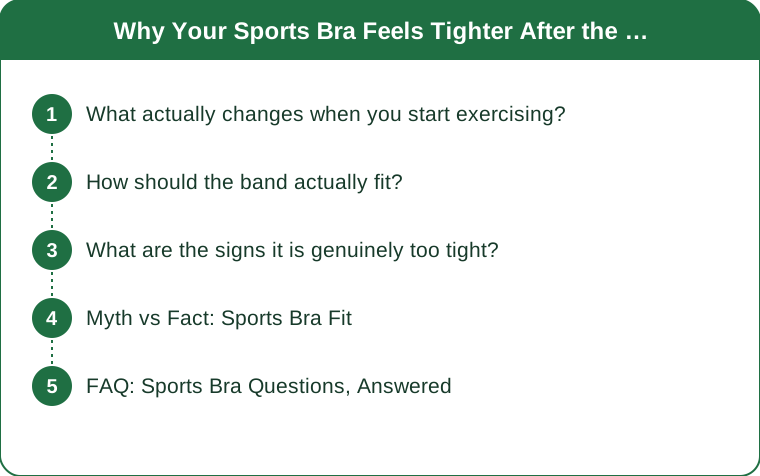
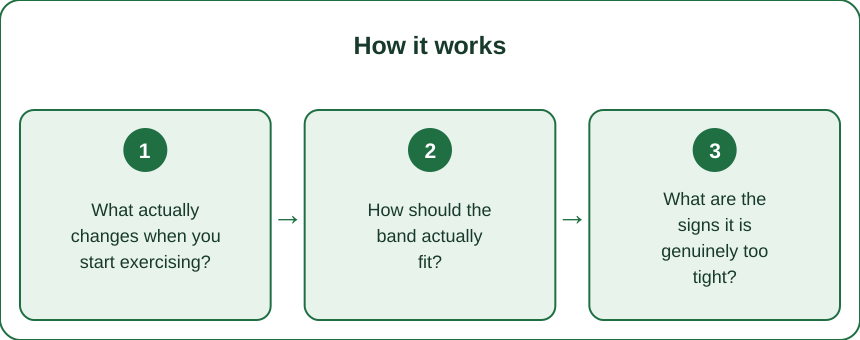
What actually changes when you start exercising?
Your torso is a different size at effort than at rest.
Breathing volume increases dramatically. At rest you move around half a litre per breath. At moderate to hard exercise that can rise to two or three litres. That air has to go somewhere, and the ribcage expands to accommodate it.
The expansion is real and measurable. Rib cage circumference increases during deep breathing, and the difference between a quiet breath and a full exercise breath is enough to change how a firm band feels entirely.
Breathing shifts from diaphragm-dominant to rib-dominant. At rest, most movement is downward via the diaphragm. Under effort, the ribs swing outward and upward — precisely where a band sits.
Warmth and swelling contribute. Blood flow to working muscles and skin increases torso volume slightly on top of the breathing change.
Damp fabric behaves differently. Many synthetic knits stiffen slightly when wet with sweat, reducing the give the band had when dry.
Which explains the specific complaint: it is never tight at minute zero. It is tight at minute ten, when breathing has doubled and the band has not moved.
How should the band actually fit?
Firmly, but with a specific test that most people skip.
The band does most of the work. Around 80% of support comes from the band, not the straps. This is why over-tightening straps to compensate for a loose band produces shoulder pain and no additional support.
Fit on the loosest hooks if it is adjustable. Bands stretch with wear and washing, and starting on the tightest setting leaves nowhere to go in three months.
The deep breath test is the one that matters. Put it on, then take the biggest breath you can. If that is uncomfortable or you cannot complete it, the band is too tight — regardless of how it feels breathing normally.
Two fingers under the band, snug not loose. You should be able to slide two fingers under it with resistance. If it slides easily, it is too loose; if you cannot get them under, it is too tight.
Check it after moving. Arm swings, a few jumping jacks, thirty seconds of movement — then reassess. Standing still in a changing room tells you almost nothing.
Ride-up means too loose, not too tight. A band that migrates upward during exercise is under-supporting and being pushed up by breast movement. The instinct to loosen it further makes it worse.

What are the signs it is genuinely too tight?
Six signs, some of which people tolerate for years.
You cannot take a full deep breath. The single clearest indicator. Restricted breathing during exercise limits performance directly and is never worth tolerating.
Red marks that persist more than 30 minutes after removing it. Brief marks are normal; lasting indentation is not.
Numbness or tingling in the arms or hands. This suggests pressure on nerves or circulation and needs addressing immediately.
Rib pain or soreness afterwards, particularly at the sides and front where the band sits.
Headaches after workouts. Often traced back to over-tight straps and upper-back tension rather than the band, but the bra is frequently the cause.
Skin irritation along the band line, especially where damp fabric plus friction plus compression combine.
And the counterintuitive one: if you find yourself breathing shallowly without deciding to, that is your body working around the restriction. Most people do not notice they are doing it until they take the bra off and breathe out.
This is general information, not medical advice. Persistent pain, numbness or breathing difficulty warrants professional attention.
Myth vs Fact: Sports Bra Fit
Myth: tighter means more support. Fact: past the correct fit, extra tightness restricts breathing without adding support. Support comes from a band that fits and stays level, not from compression.
Myth: the straps provide the support. Fact: the band does around 80% of it. Tightening straps to fix a loose band is the most common fitting error there is, and it causes shoulder and neck pain.
Myth: you should size down for high-impact activity. Fact: you should size correctly and choose a high-impact design — encapsulation rather than pure compression, wider band, better construction. Sizing down is not a substitute for the right bra.
Myth: your sports bra size matches your regular bra size. Fact: often not, and it varies more between brands than everyday bras do. Fit each one on its own.
Myth: sports bras last for years. Fact: elastane degrades with wear, washing and heat. Most need replacing every 6 to 12 months with regular use, and a bra that has stopped supporting is not obvious until you try a new one.
Myth: riding up means it is too tight. Fact: the opposite. Ride-up means the band is too loose and is being pushed upward.
Myth: some breast movement during exercise is unavoidable. Fact: a correctly fitted high-impact bra reduces movement substantially, and the difference between a poor fit and a good one is large enough to change whether running is comfortable at all.
FAQ: Sports Bra Questions, Answered
How tight should the band be?
Two fingers under it with resistance, and you must be able to take a full deep breath. Fit on the loosest hooks if adjustable.
Why does it feel tighter during a workout?
Your ribcage genuinely expands as breathing deepens, and damp fabric gives slightly less. Fit for the working state, not the resting one.
Why does my bra ride up?
The band is too loose. Counterintuitive, but ride-up is a support failure, not over-tightness.
How often should I replace it?
Every 6 to 12 months with regular use. Elastane degrades, and the loss is gradual enough that you do not notice until you replace it.
How should I wash it?
Cool wash, no fabric softener, air dry. Tumble drying destroys elastane faster than anything else you can do.
Can I wear a sports bra all day?
Occasionally is fine. Daily all-day wear of a firm compression bra is worth avoiding — give your skin and ribs time without it.
Why does my sports bra smell even after washing?
Synthetic fabrics trap oils that regular detergent does not fully remove. A sports-specific detergent, no softener, and washing promptly rather than leaving it damp in a bag all help.
TL;DR:
- Your ribcage expands as breathing deepens — a band fitted at rest gets tight within minutes.
- The band provides about 80% of support; tightening straps to compensate causes shoulder pain and fixes nothing.
- Fit on the loosest hooks, two fingers under with resistance, and confirm you can take a full deep breath.
- Check the fit after moving, not standing still in a changing room.
- Ride-up means too loose, not too tight.
Before your next workout, put your bra on and take the biggest breath you can. If you cannot finish it, that is your answer.
See It in Motion
Seen here: Crewneck Short Sleeve Workout T-Shirt — shop it on bubblelime.com
Keep Reading
This article is for general informational and styling purposes only. Fit, sizing, and product availability may vary.